
Health for Life: 7 Science-Backed Habits That Add Years to Your Life (Start Today)
A structured, publication-ready presentation of the complete guide on healthspan, longevity science, and the daily habits that support a longer, healthier life.
Why Most People Get “Health for Life” Completely Wrong
Here is an uncomfortable truth that most wellness articles will not open with: the majority of people walking around right now believe they are healthy when they are not.
Not because they are foolish. Not because they do not care. But because the modern definition of health has been quietly, dangerously reduced to a single question — “Do I feel sick today?” — and if the answer is no, we carry on. We grab the coffee, skip the walk, stay up too late, and tell ourselves we will sort it all out when things slow down.
Things never slow down.
And that is exactly where the problem begins.
The Illusion of Being “Fine”
There is a seductive comfort in feeling fine. It is the health equivalent of checking your bank balance, seeing it is not zero, and assuming your finances are in great shape. The number looks okay. Nothing is on fire. So you move on.
But genuine, lifelong health is not the absence of symptoms. It is the presence of vitality — the kind that carries you through decades without the slow, grinding deterioration that most people quietly accept as inevitable aging.
Consider this: chronic lifestyle diseases — heart disease, type 2 diabetes, hypertension, certain cancers — do not announce themselves overnight. They develop silently, over 10 to 20 years, building beneath the surface while you feel, for all intents and purposes, completely fine. A 2019 report from the Centers for Disease Control and Prevention noted that 6 in 10 American adults live with at least one chronic disease, and many had no idea it was developing until a diagnosis forced the conversation.
That is the illusion of fine. It feels safe. It is not.
The gap between feeling okay and thriving long-term is one of the most underestimated distances in human health. And most people only discover how wide that gap was when they are already on the wrong side of it — facing a diagnosis, managing a condition, or watching their energy and mobility quietly disappear in their 50s and 60s when they expected to be at their best.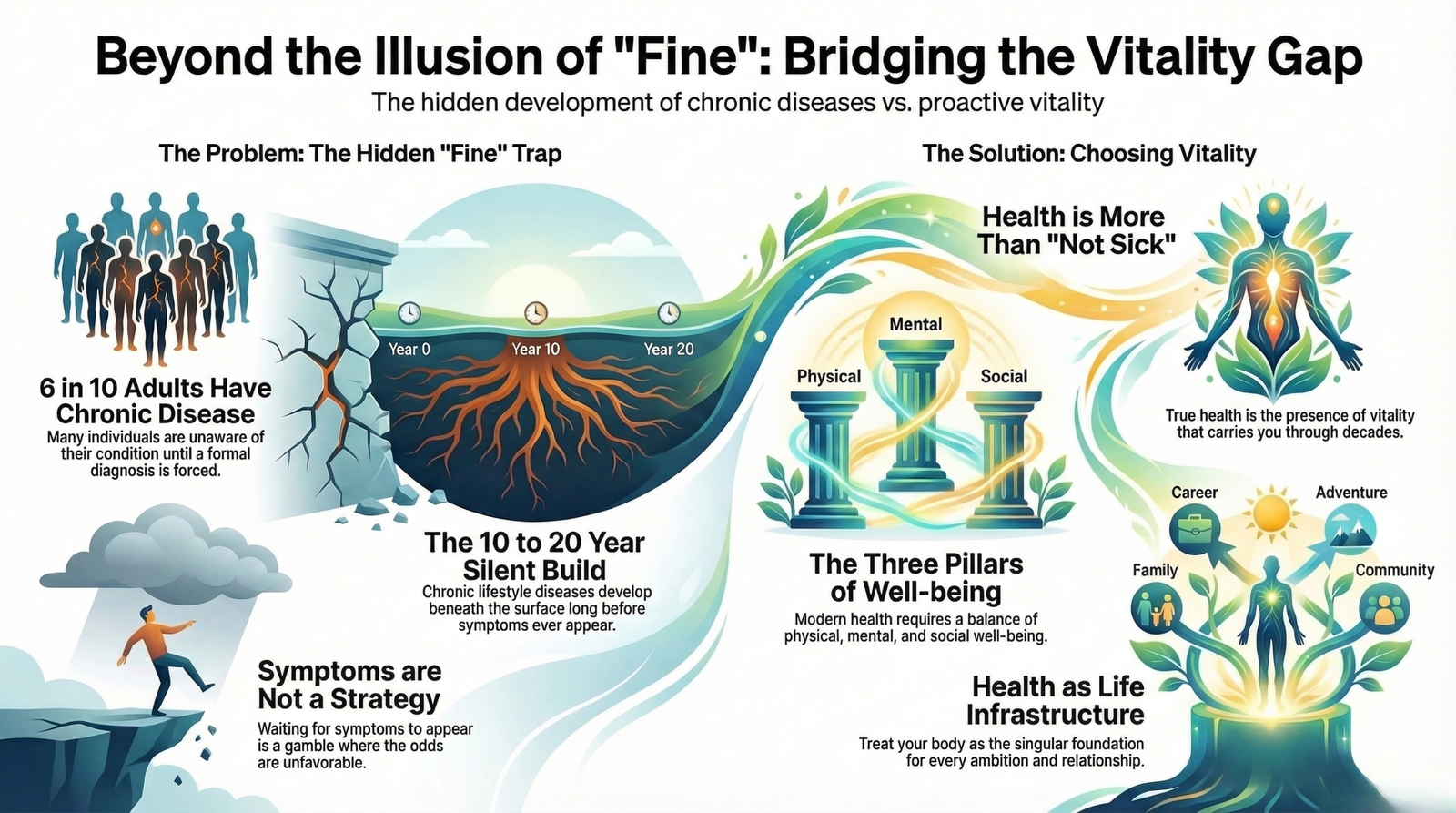
Waiting for symptoms is not a health strategy. It is a gamble. And the odds are not in your favor.
What “Health for Life” Actually Means in 2025
Let us clear something up immediately, because this matters enormously.
Health for life is not a diet. It is not a 30-day challenge. It is not a morning routine you found on social media or a supplement stack promoted by someone with exceptional lighting and a beach backdrop.
Health for life is a philosophy of daily investment — a commitment to treating your body and mind as the singular infrastructure through which every other ambition, relationship, and experience in your life flows.
The World Health Organization defines health not merely as the absence of disease, but as “a state of complete physical, mental, and social well-being.” That definition, radical when first published in 1948, is arguably more relevant today than it has ever been. Because what research has made undeniably clear in the decades since is that health is multidimensional — and neglecting any one dimension eventually compromises all the others.
Think of it this way:
- ✓Physical health is your foundation — your cardiovascular system, metabolic function, musculoskeletal strength, and immune resilience.
- ✓Mental health is your operating system — your cognitive clarity, emotional regulation, stress response, and psychological flexibility.
- ✓Emotional health is your fuel quality — your ability to process difficulty, experience joy, and maintain inner equilibrium under pressure.
- ✓Social health is your network infrastructure — the quality of your relationships, your sense of belonging, and your connection to something larger than yourself.
Neglect the physical and the mental begins to fracture. Ignore the emotional and the physical pays the price through stress-driven inflammation and hormonal dysregulation. Strip away the social and all three suffer in ways that science is only now beginning to fully quantify.
Health for life, properly understood, is the ongoing, intentional cultivation of all four dimensions — not perfectly, not obsessively, but consistently enough that the compounding effect works in your favor rather than against you.
This is not about becoming a wellness influencer. It is about building a life in which your body and mind are reliable, capable partners for as long as you need them. Which, ideally, is a very long time.
Why Everything You Have Been Doing Might Be Half the Picture
Most people who do care about their health — and there are many — tend to focus intensely on one dimension while the others drift. The dedicated gym-goer who sleeps five hours a night and is chronically stressed at work. The mindfulness practitioner who eats almost exclusively ultra-processed convenience food. The socially vibrant extrovert who has not had a proper medical checkup in seven years.
Partial health is still partial. And in the long run, the weakest link in your health architecture is often the one that determines your outcome.
This is not said to overwhelm you. Quite the opposite. Because once you understand that health for life is a system rather than a single behaviour, the path forward becomes far more navigable. You stop looking for the one miracle habit and start building the interconnected foundation that actually sustains a long, vital life.
Which is precisely what this guide is designed to help you do.
What You Will Discover in This Guide
This is not a listicle dressed up in scientific language. What follows is a structured, evidence-informed blueprint built on decades of longevity research, behavioural science, and the hard-won lessons of populations around the world who are quietly living longer, healthier, and more satisfying lives than the rest of us.
Specifically, you will explore:
- ✓What the science of longevity actually says — not the headline version, but the substantive findings that researchers are building careers on.
- ✓7 science-backed habits that have the strongest evidence base for extending both lifespan (how long you live) and healthspan (how well you live while you are alive).
- ✓How to build these habits into a system that sustains itself — one that does not require superhuman willpower or a life free of stress, family obligations, and deadlines.
- ✓A realistic starting point — because the goal is not perfection. It is momentum.
This guide is written for busy adults between 30 and 60 who are done with generic advice, suspicious of miracle claims, and ready for something grounded, actionable, and designed to last.
You do not need to overhaul your life by Friday. You need to understand the principles well enough to make better decisions starting today — and then again tomorrow, and the day after that.
That is how health for life actually works.
Frequently Asked Questions: Health for Life Basics
Absolutely not — and this is not empty reassurance. Research published in journals including JAMA Internal Medicine and The Lancet has consistently shown that lifestyle interventions deliver meaningful health benefits at virtually any age. The body is remarkably adaptive. Cardiovascular fitness improves within weeks of regular movement. Inflammatory markers respond to dietary changes within months. Cognitive function responds to sleep improvement almost immediately. Starting later simply means your timeline looks different — it does not mean the effort is wasted.
No — and attempting to do so is one of the most common reasons people burn out and abandon their efforts entirely. The approach advocated throughout this guide is sequential and sustainable: identify your weakest dimension, address it with one or two specific habits, build consistency, then layer in the next. The habits in this guide are also deeply interconnected, meaning progress in one area naturally supports progress in others.
The distinction is primarily one of intention and systems thinking. Living a healthy lifestyle often describes a collection of positive behaviours. Health for life is a deliberate, long-term framework — one that accounts for how habits interact, how setbacks are absorbed, and how health decisions today shape your biology and quality of life 20 and 30 years from now. It is the difference between good choices and a coherent strategy.
The illusion of being fine is one of the most human traps there is. We are not wired for invisible, long-term threats. We respond to what is immediate, urgent, and visible. Which is why building a health for life framework requires something our instincts do not naturally provide: a longer view.
And that longer view starts with understanding what science has actually discovered about how humans live — and thrive — over time.
Which brings us to one of the most compelling bodies of research in modern medicine. Researchers have spent decades studying the places on earth where people routinely live past 90 and 100 — not in hospitals, not in decline, but actively, with purpose and physical capability intact. What they found challenges almost everything the modern wellness industry is built on.
In the next section, we go deep into what that research actually says — including the landmark findings from the Blue Zones, the emerging science of biological aging, and why the compounding effect of small daily habits is the most powerful longevity tool available to you right now.
What Research Actually Says About Living a Longer, Healthier Life
Science does not deal in miracles. It deals in patterns — and when the same patterns appear across wildly different cultures, geographies, diets, and belief systems, the research community pays attention. Serious attention.
Over the past three decades, longevity science has quietly undergone a revolution. What was once a field dominated by pharmaceutical interventions and genetic determinism has shifted dramatically toward something far more empowering: the recognition that how you live, day by day, shapes how long and how well you live in ways that dwarf the influence of your DNA.
This section unpacks what that research actually shows. No cherry-picked statistics. No oversimplified takeaways. Just the substantive science — made accessible enough to act on.
Lessons From the Blue Zones
In the early 2000s, National Geographic explorer and researcher Dan Buettner partnered with a team of demographers, epidemiologists, and public health scientists to answer a deceptively simple question: Where do people live the longest, and why?
What they found was extraordinary.
Scattered across the globe were five distinct regions — demographically verified, rigorously studied — where people routinely lived past 90 and 100, not in nursing homes or prolonged medical decline, but with remarkable physical capability, cognitive sharpness, and social engagement intact. Buettner called these regions Blue Zones, and they have since become arguably the most cited framework in longevity research.
The five Blue Zone regions are:
- 🇮🇹 Sardinia, Italy — Particularly the mountainous Barbagia region, home to the world’s highest concentration of male centenarians
- 🇯🇵 Okinawa, Japan — Women here have historically lived longer than anywhere else on earth, with exceptionally low rates of heart disease and dementia
- 🇺🇸 Loma Linda, California — A community of Seventh-day Adventists whose lifestyle habits produce lifespans averaging 7 to 10 years longer than surrounding American populations
- 🇨🇷 Nicoya Peninsula, Costa Rica — Despite modest incomes, Nicoyans have a remarkable ability to reach 90 with low rates of cancer and cardiovascular disease
- 🇬🇷 Ikaria, Greece — An Aegean island where residents are nearly 2.5 times more likely to reach 90 than Americans, with significantly lower rates of depression and dementia
What makes the Blue Zones scientifically compelling is not any single finding — it is the convergence. These populations share no common language, religion, or diet. Yet when researchers examined their daily lives, nine lifestyle patterns emerged with striking consistency. Buettner documented these as the Power 9 — principles including natural daily movement, purposeful living, plant-slanted diets, moderate caloric intake, strong social networks, and a sense of belonging.
The conclusion is both humbling and galvanising: longevity is not primarily inherited. It is largely constructed — through environment, habit, and community.
This is reinforced by a landmark study from Stanford University’s genetics department, which analysed the heritability of lifespan across a database of more than 400 million people. The findings were striking — genetic factors account for roughly 20 to 25 percent of longevity variance. The remaining 75 to 80 percent is attributed to non-genetic factors: what you eat, how you move, how you sleep, how connected you are, and how effectively you manage stress.
Read that again. Three quarters of how long you live is within your sphere of influence.
The Hallmarks of Aging — And How to Slow Them
Understanding why we age used to be the exclusive domain of molecular biologists and gerontologists. Today, it is increasingly accessible — and the implications for everyday health decisions are profound.
In 2013, a landmark paper by Carlos López-Otín and colleagues, published in the journal Cell, identified nine fundamental biological processes that drive aging at the cellular level. A subsequent update in 2023 expanded this to twelve hallmarks, now considered the most comprehensive framework for understanding aging in modern science.
You do not need a biology degree to grasp the essential point. The hallmarks of aging describe the ways in which your cells, tissues, and systems gradually lose their ability to function, replicate, and repair themselves over time. They include processes such as:
- Genomic instability — the accumulation of DNA damage over time that cells can no longer efficiently repair
- Telomere attrition — the shortening of protective caps on chromosomes with each cell division, a biological clock with measurable consequences
- Cellular senescence — the build-up of aged, dysfunctional cells that stop dividing but remain metabolically active, secreting inflammatory signals that damage surrounding tissue
- Mitochondrial dysfunction — the declining efficiency of the cellular energy-production system, linked to fatigue, cognitive decline, and metabolic disease
- Chronic inflammation — sometimes called “inflammaging”, this low-grade, persistent inflammatory state underlies virtually every major age-related disease
Here is what makes this directly relevant to your daily choices: every single one of these hallmarks is modifiable by lifestyle factors.
Telomere length — often described as a molecular measure of biological age — is influenced by sleep quality, stress levels, dietary patterns, and physical activity. A landmark study by Dr. Dean Ornish demonstrated that comprehensive lifestyle changes, including diet, movement, stress management, and social support, led to measurable telomere lengthening over five years — the first study to show that lifestyle could not just slow but actually reverse a key marker of biological aging.
Cellular senescence is accelerated by chronic sleep deprivation, high sugar consumption, sedentary behaviour, and psychological stress — all modifiable. Mitochondrial function improves with regular aerobic and resistance exercise. Chronic inflammation responds directly to dietary quality, movement, sleep, and stress reduction.
This is not theoretical optimism. It is molecular evidence that the habits you build today are literally rewriting the biology of how you age.
The concept of biological age — as distinct from your chronological age — has moved from research curiosity to clinical relevance. Companies and research institutions now offer validated biological age assessments using epigenetic clocks (most notably the Horvath Clock and its successors), which measure patterns of DNA methylation to estimate how old your cells actually are, regardless of what the calendar says.
People of the same chronological age can have biological ages that differ by 10 to 20 years — and the primary drivers of that difference are, overwhelmingly, lifestyle factors.
The Compounding Effect of Healthy Habits
This is where the science becomes not just interesting but genuinely urgent.
Most people understand compounding in a financial context. Invest consistently, earn returns on those returns, and over decades the curve bends sharply upward in ways that feel almost improbable when you started. Health works in exactly the same way — except the asset being compounded is not money. It is biological resilience, cognitive capacity, metabolic efficiency, and physical vitality.
And critically, compounding works in both directions.
Every night of poor sleep generates a small inflammatory response. Repeated over years, that inflammation accumulates, accelerating cellular aging and increasing disease risk. Every sedentary day reduces mitochondrial efficiency slightly. Every chronic stress episode nudges cortisol dysregulation a little further from baseline. Individually, none of these events is catastrophic. Collectively, over a decade or two, they compound into conditions that feel sudden but were building steadily all along.
The inverse is equally true — and this is the genuinely good news.
A study published in the New England Journal of Medicine found that adopting five specific healthy habits — moderate physical activity, a healthy diet, maintaining a healthy weight, not smoking, and moderate alcohol consumption — was associated with an additional 12 to 14 years of life expectancy compared to individuals with none of these habits. Not one habit. Five. Stacked together, compounding.
A separate analysis from the American Heart Association, tracking over 100,000 adults across 30 years, found that individuals who maintained healthy lifestyle factors from middle age reduced their lifetime risk of cardiovascular disease by more than 80 percent.
Here is what the research makes clear about the compounding health effect:
- Starting matters more than starting perfectly. Even partial adoption of healthy habits produces measurable benefits.
- Consistency outperforms intensity. A 30-minute daily walk sustained for 10 years delivers more longevity benefit than extreme exercise programmes pursued sporadically.
- Habits interact and amplify each other. Better sleep improves dietary choices. Regular movement reduces stress. Reduced stress improves sleep. The system self-reinforces when the right inputs are in place.
- The benefit curve is non-linear. Early gains are modest. But after 3 to 5 years of consistent healthy behaviour, the biological benefits begin to accelerate — the compounding curve bends.
It is never too late to begin. A 2019 study published in JAMA Internal Medicine found that adults who adopted healthy lifestyle habits in their 50s still gained significant reductions in premature mortality risk compared to those who did not — even after accounting for prior years of less healthy behaviour. The body is not punishing you for the past. It is responding to what you give it now.
The J-curve of wellness describes this phenomenon precisely: there is a period of investment — perhaps uncomfortable, perhaps inconvenient — during which visible results are modest. Then, gradually, the biology shifts. Energy improves. Sleep deepens. Mood stabilises. And the health returns begin compounding in ways that feel, to many people, like a second lease on life.
Frequently Asked Questions: The Science of Longevity
Genetic predisposition is real and should not be dismissed — it simply should not be treated as destiny. Families that live long may share not just genes but also environments, dietary cultures, social patterns, and stress-management traditions that collectively support longevity. Genetics can confer advantages or disadvantages at the margins, but the research is consistent: lifestyle factors are the dominant determinant of lifespan and healthspan for the overwhelming majority of people.
Lifespan refers to total years lived. Healthspan refers to the years lived in good health — free from significant disease, disability, or cognitive decline. The goal of health for life is to extend both simultaneously — not to simply add years at the end that are defined by dependency and diminished capacity, but to compress the period of decline and expand the period of vitality. The good news is that the habits that extend lifespan almost universally extend healthspan as well.
Increasingly, yes — particularly those based on validated epigenetic clock methodologies. They are not infallible, and the science is still maturing, but they can serve as a useful motivational and diagnostic tool, giving you a concrete data point on whether your habits are translating into measurable biological outcomes. They are best used as one input among several, alongside conventional biomarkers like inflammation markers, blood glucose, and lipid profiles.
Both — and the evidence for reversal is stronger than most people realise. Type 2 diabetes has been clinically reversed through dietary intervention and weight loss in multiple large-scale trials. Cardiovascular disease risk has been measurably reduced through lifestyle changes even in individuals with established disease. Cognitive decline has been slowed and in some cases partially reversed through exercise, sleep improvement, and dietary change. Lifestyle interventions are not a replacement for medical treatment where it is required, but they are a powerful complement — and in some contexts, a primary therapeutic tool in their own right.
The evidence is compelling, the mechanisms are understood, and the timeline for benefit — while requiring patience — is well within reach for virtually anyone willing to begin.
But knowing why healthy habits work is only half the equation. The more practical and urgent question is: which specific habits carry the strongest evidence base, and how do you actually implement them in a life that is already full?
That is exactly what the next section addresses. We move now from the science of longevity to the 7 specific, research-validated habits that have emerged from decades of data as the most powerful levers for building health for life — one actionable step at a time.
The 7 Habits That Deliver Health for Life — Backed by Science
Knowing that lifestyle shapes longevity is one thing. Knowing which lifestyle factors carry the strongest evidence — and understanding exactly how to apply them — is another matter entirely.
The habits outlined in this section are not assembled from trending wellness content or anecdotal success stories. They are drawn from decades of peer-reviewed research, longitudinal population studies, and the convergent findings of longevity scientists working across disciplines including cardiology, neuroscience, sleep medicine, nutritional epidemiology, and behavioural psychology.
Each habit is followed by a concrete, immediately actionable tip. Because information without application is just entertainment.
Habit 1 — Move Your Body Every Single Day (Not Just at the Gym)
Let us begin with the most fundamentally misunderstood habit in the entire wellness conversation.
When most people think about exercise and health, they picture the gym. A membership card. A structured programme. Scheduled sessions three or four times a week, bookended by the rest of a largely sedentary life. And while structured exercise is genuinely valuable, the research suggests that this framing misses something critical — something that may actually matter more than the workouts themselves.
That something is NEAT: Non-Exercise Activity Thermogenesis. It refers to the energy your body expends during all physical movement that is not formal exercise — walking to a meeting, taking the stairs, cooking, fidgeting, carrying groceries. It sounds almost insultingly simple. The science behind it is anything but.
A body of research led by Dr. James Levine at the Mayo Clinic demonstrated that NEAT accounts for the majority of daily caloric expenditure for most people — and that individuals with high NEAT levels show dramatically better metabolic profiles, lower rates of cardiovascular disease, and healthier body composition than those whose activity is concentrated in isolated exercise sessions surrounded by prolonged sitting.
The problem with modern life is not that people never exercise. It is that they sit for 10 to 12 hours a day, and no amount of gym time fully compensates for that sustained inactivity. A landmark study published in the Annals of Internal Medicine found that prolonged uninterrupted sitting was associated with significantly elevated mortality risk — independent of exercise habits. People who exercised regularly but sat for extended periods still showed elevated risk compared to those who moved consistently throughout the day.
The World Health Organization recommends a minimum of 150 to 300 minutes of moderate-intensity aerobic activity per week for adults, alongside muscle-strengthening activities on two or more days. That baseline is well-supported by evidence — but it is a floor, not a ceiling.
Movement recommendations by life stage and capacity:
- 30s: Build the exercise habit now, before competing demands make it harder. Prioritise a combination of cardiovascular exercise, resistance training, and mobility work. Your musculoskeletal foundation is still highly adaptable.
- 40s: Resistance training becomes increasingly critical as muscle mass begins its natural decline (sarcopenia accelerates significantly without intervention after 40). Protect your joints with mobility and flexibility work.
- 50s and beyond: Consistency and variety matter most. Balance training reduces fall risk — a leading cause of injury-related mortality in older adults. Walking remains one of the most evidence-supported activities at any age.
How does daily movement protect your long-term health? Regular physical activity reduces cardiovascular disease risk by up to 35%, cuts type 2 diabetes risk significantly, improves insulin sensitivity, supports healthy weight regulation, reduces systemic inflammation, strengthens bone density, sharpens cognitive function, and is one of the most robustly evidenced interventions for reducing depression and anxiety.
It also, quite simply, makes you feel more alive. That is not incidental. It matters.
⚡ Quick Action Tip — The 5-Minute Movement Rule: If you work at a desk, set a timer for every 50 minutes. When it goes off, stand up and move for five minutes — walk, stretch, climb stairs, do anything that is not sitting. This single habit, applied consistently, can meaningfully offset the metabolic costs of a sedentary profession.
Habit 2 — Eat for Longevity, Not Just Weight Loss
The global nutrition conversation is dominated by weight. Calories in, calories out. Before and after photos. Dress sizes and scale numbers. And while maintaining a healthy body weight is genuinely important for long-term health, framing food primarily as a weight management tool fundamentally misses the point of eating for a long, vital life.
Longevity nutrition is a distinct and more expansive concept. It asks not just how much you eat but what your food is actually doing inside your body — at the cellular, hormonal, and inflammatory level.
The evidence base here is substantial and increasingly coherent. Across Blue Zone populations, Dr. Valter Longo’s research on longevity diets, the PREDIMED trial (one of the largest dietary intervention studies ever conducted), and decades of nutritional epidemiology, several dietary patterns emerge consistently as protective against premature aging and chronic disease.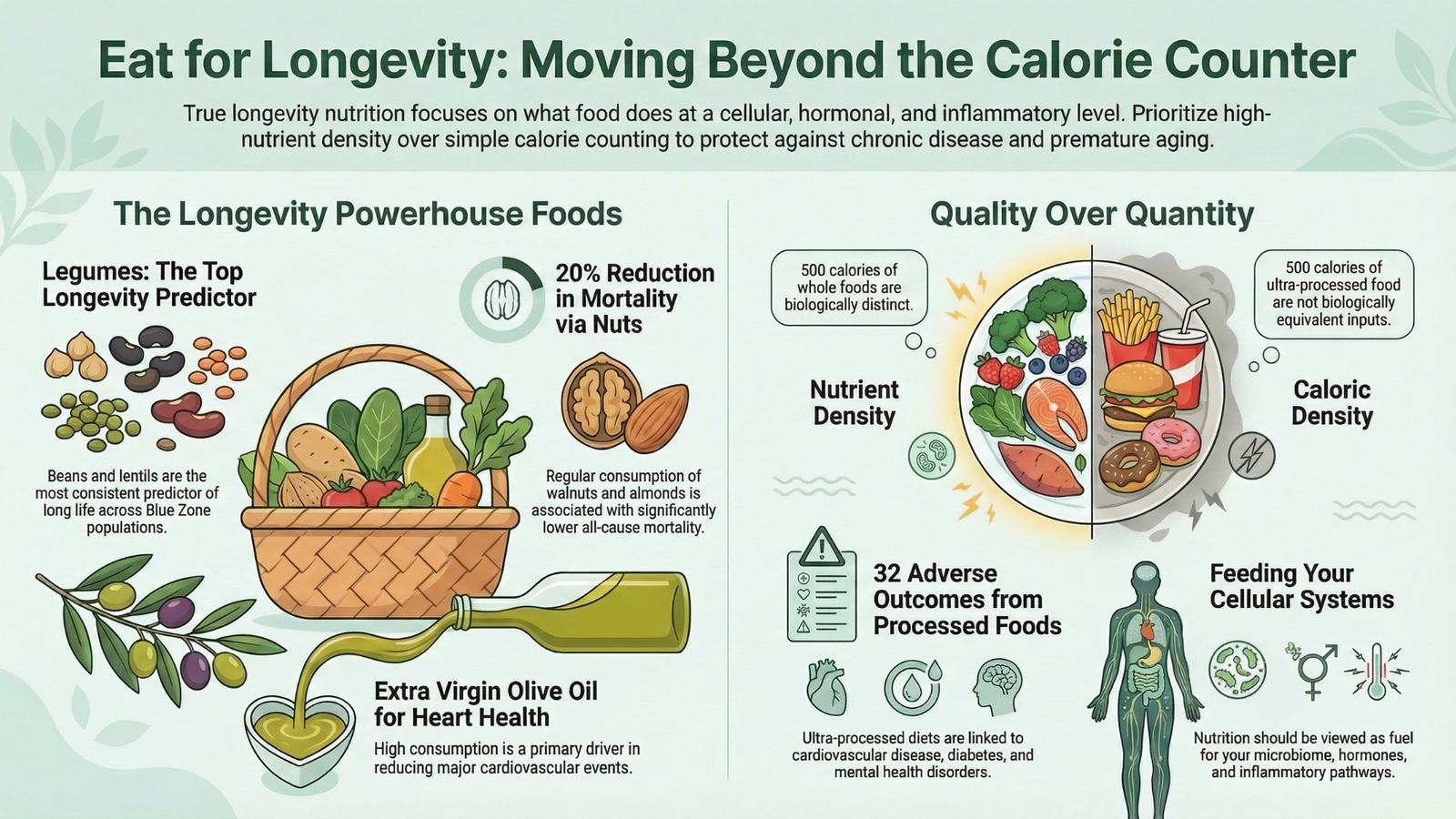
Foods with the strongest evidence base for longevity:
- Legumes (beans, lentils, chickpeas) — Perhaps the single most consistent predictor of long life across Blue Zone populations. Rich in fibre, plant protein, and resistant starch that feeds beneficial gut bacteria.
- Leafy green vegetables — Spinach, kale, Swiss chard, and their relatives are dense with folate, magnesium, vitamin K, and antioxidants that combat oxidative stress and inflammation.
- Extra virgin olive oil — The cornerstone of the Mediterranean diet and a primary focus of the PREDIMED trial, which found that high consumption was associated with significantly reduced cardiovascular events.
- Nuts — Particularly walnuts and almonds. A large Harvard study found that regular nut consumption was associated with a 20% reduction in all-cause mortality.
- Whole grains — Oats, barley, farro, and brown rice provide sustained energy, support gut microbiome diversity, and are associated with reduced inflammation and lower type 2 diabetes risk.
- Fermented foods — Yogurt, kefir, kimchi, and miso support the gut microbiome, which emerging research links to immune function, mental health, metabolic regulation, and even longevity.
On the other side of the equation, the evidence against ultra-processed foods — industrially manufactured products with long ingredient lists dominated by refined starches, added sugars, industrial seed oils, and synthetic additives — has become difficult to ignore. A 2024 umbrella review published in the British Medical Journal, analysing data from nearly 10 million people across 45 meta-analyses, found that high ultra-processed food consumption was associated with 32 distinct adverse health outcomes, including cardiovascular disease, type 2 diabetes, mental health disorders, and all-cause mortality.
The distinction between caloric density and nutrient density is worth internalising permanently. A 500-calorie serving of ultra-processed snack food and a 500-calorie meal of salmon, roasted vegetables, and quinoa are not remotely equivalent inputs for your biology — even though they register identically on a calorie counter.
You are not just feeding your hunger. You are feeding your cells, your gut microbiome, your inflammatory pathways, and your hormonal system. What you consistently put in determines what you consistently get out.
⚡ Quick Action Tip — The “Add Before You Subtract” Plate Method: Rather than beginning with restriction (which triggers psychological resistance), start by adding one serving of vegetables or legumes to each meal. Over time, these additions naturally crowd out less nutritious options without requiring willpower battles. Progress through addition, not deprivation.
Habit 3 — Prioritise Sleep Like Your Life Depends on It (Because It Does)
Sleep is the most underrated health intervention available to human beings. It is free, it is natural, it is extraordinarily well-evidenced — and it is treated by modern culture as an inconvenient biological necessity to be minimised in favour of productivity.
This is, without overstating it, a catastrophic misunderstanding.
During sleep — specifically during deep slow-wave sleep and REM sleep — your body executes processes that are impossible to replicate through any other means. The glymphatic system, a waste-clearance network in the brain that operates primarily during sleep, flushes out toxic metabolic byproducts including amyloid-beta and tau proteins — the same proteins that accumulate in the brains of Alzheimer’s patients. Hormonal regulation, immune function, cellular repair, memory consolidation, and emotional processing all depend on adequate, high-quality sleep in ways that no supplement, biohack, or compensatory strategy can substitute for.
The evidence linking chronic sleep insufficiency to serious disease is now overwhelming:
- Cardiovascular disease: Adults sleeping fewer than 6 hours per night show significantly elevated risk of heart attack and stroke, independent of other risk factors.
- Type 2 diabetes: Even one week of sleep restriction to 5 hours per night measurably impairs insulin sensitivity in healthy adults.
- Obesity: Sleep deprivation disrupts the hormones leptin and ghrelin — which regulate hunger and satiety — increasing appetite and preference for high-calorie foods.
- Dementia: A 2021 study published in Nature Communications, tracking nearly 8,000 people over 25 years, found that consistently sleeping 6 hours or fewer at age 50 was associated with a 30% increased risk of developing dementia.
- Mental health: Chronic poor sleep is both a symptom and a cause of depression, anxiety, and emotional dysregulation — a bidirectional relationship that can create deeply entrenched cycles.
The evidence base supports 7 to 9 hours of sleep per night for most adults as the optimal range — not as a luxury, but as a biological requirement. The concept of sleep debt — the idea that lost sleep can be meaningfully recovered on weekends — has been substantially undermined by research showing that the metabolic and cognitive impairments of sleep restriction persist even after recovery sleep.
Equally important, and less discussed, is circadian rhythm alignment — the synchronisation of your sleep-wake cycle with your body’s internal biological clock. Research by Dr. Satchin Panda and colleagues has demonstrated that the timing of sleep matters alongside its duration. Going to bed and waking at consistent times, even on weekends, and aligning light exposure with natural patterns, significantly improves sleep quality and metabolic health independent of total sleep hours.
⚡ Quick Action Tip — The 3-2-1 Rule: In the three hours before bed, stop eating heavy meals. In the two hours before bed, stop working and screen-intensive activities. In the one hour before bed, dim lights and begin a wind-down ritual. This simple sequence aligns beautifully with circadian biology and can produce measurable improvements in sleep quality within days.
Habit 4 — Manage Stress Before It Manages You
Stress is not your enemy. Let that land for a moment, because it runs counter to most of what the wellness industry tells you.
Acute stress — the short-term physiological response to a genuine challenge or threat — is adaptive, useful, and in moderate doses, even health-promoting. It sharpens focus, mobilises energy, and drives performance. The human stress response evolved for exactly this purpose, and it works.
Chronic stress is an entirely different biological phenomenon — and it is genuinely dangerous in ways that are now precisely understood at the molecular level.
When the hypothalamic-pituitary-adrenal (HPA) axis is chronically activated by persistent psychological stressors — financial pressure, relationship conflict, workplace overload, prolonged uncertainty — the sustained elevation of cortisol and other stress hormones creates a cascade of damaging downstream effects:
- Systemic inflammation increases as cortisol’s anti-inflammatory function becomes dysregulated with chronic overactivation
- Immune suppression leaves the body more vulnerable to infection and less capable of early cancer cell surveillance
- Hippocampal atrophy — the hippocampus, critical for memory and emotional regulation, physically shrinks under prolonged cortisol exposure
- Cardiovascular strain through elevated blood pressure, arterial inflammation, and increased clotting risk
- Gut microbiome disruption via the gut-brain axis, linking chronic stress to digestive disorders, altered appetite, and mood dysregulation
The evidence-based tools for chronic stress reduction are well-established and, importantly, they work through identifiable biological mechanisms — not simply by making you feel calmer in the moment.
Evidence-supported stress reduction approaches:
- Breathwork: Controlled breathing patterns, particularly those that extend the exhale, directly activate the parasympathetic nervous system and reduce cortisol. This is not metaphorical — it is measurable in real time through heart rate variability.
- Mindfulness meditation: A landmark meta-analysis published in JAMA Internal Medicine found that mindfulness meditation programmes produced moderate reductions in anxiety, depression, and stress. Dr. Jon Kabat-Zinn’s Mindfulness-Based Stress Reduction (MBSR) programme has the strongest evidence base.
- Nature exposure: Research from Japan on Shinrin-yoku (forest bathing) demonstrates measurable reductions in cortisol, blood pressure, and sympathetic nervous system activity after time spent in natural environments.
- Journaling: Expressive writing — specifically processing difficult experiences through structured written reflection — has been shown to reduce psychological distress and improve immune function in multiple controlled studies.
Central to all of these approaches is the vagus nerve — the primary conduit of the parasympathetic nervous system, running from the brainstem through the heart, lungs, and digestive organs. Vagal tone — the strength and responsiveness of vagus nerve signalling — is a measurable indicator of stress resilience and is directly improved by breathwork, cold exposure, singing, social connection, and meditation. High vagal tone is associated with better emotional regulation, lower inflammation, and reduced cardiovascular risk.
⚡ Quick Action Tip — The 4-7-8 Breathing Method: Inhale through your nose for 4 counts. Hold for 7 counts. Exhale slowly through your mouth for 8 counts. Repeat four times. This pattern powerfully activates the parasympathetic nervous system and can measurably reduce acute stress within minutes. Practice it daily — not just in moments of crisis.
Habit 5 — Build and Protect Your Social Connections
Of all the habits in this list, this is the one most likely to be dismissed as soft — as the kind of lifestyle factor that is nice to have but surely not in the same category as sleep quality or dietary patterns when it comes to hard health outcomes.
The data says otherwise. Emphatically.
The Harvard Study of Adult Development — the longest-running study of adult life ever conducted, now spanning 85 years and three generations — set out to identify the factors most predictive of health, happiness, and longevity. Its conclusions, published and updated across decades, converge on a finding that its directors describe as the study’s clearest result: the quality of your relationships is the single most powerful predictor of long-term health and wellbeing. Not wealth. Not fame. Not even physical health behaviours in isolation.
Relationships.
This is not a soft finding. It is a biological one.
Dr. Julianne Holt-Lunstad, whose research on social connection and health is among the most cited in the field, conducted a meta-analysis of 148 studies involving over 300,000 participants and found that strong social relationships increased the likelihood of survival by 50%. A subsequent analysis found that loneliness and social isolation carry a mortality risk comparable to smoking 15 cigarettes per day — greater than the risk associated with obesity or physical inactivity.
The mechanisms are understood. Social connection:
- Reduces circadian cortisol patterns and systemic inflammation
- Activates the release of oxytocin, which has direct cardiovascular and immune benefits
- Provides behavioural reinforcement for other healthy habits through social norms and accountability
- Reduces allostatic load — the cumulative physiological burden of chronic stress
- Is one of the most robust protective factors against cognitive decline and dementia identified in the literature
The critical distinction here is between surface-level socialising and meaningful connection. Passive social media consumption, transactional workplace interaction, and large-group social events without depth do not deliver the same biological benefits as relationships characterised by mutual trust, emotional safety, and genuine reciprocity. It is the quality, not the quantity, of connection that drives the health outcome.
⚡ Quick Action Tip: Schedule one intentionally deep conversation per week — with a friend, family member, or mentor — that moves beyond logistical updates and surface pleasantries. Ask real questions. Share honestly. The investment is modest. The biological return, compounded over years, is significant.
Habit 6 — Stay Hydrated and Support Your Body’s Natural Systems
Hydration is perhaps the most straightforward habit on this list — and simultaneously one of the most consistently neglected.
Studies suggest that a significant proportion of adults are in a state of chronic mild dehydration — not severely enough to trigger acute thirst, but enough to meaningfully impair physiological function across multiple systems. This matters more than most people appreciate.
Even mild dehydration of 1 to 2% of body weight has been shown to impair cognitive performance, reduce physical endurance, increase perception of effort during exercise, and elevate markers of kidney stress. Over time, chronic inadequate hydration is associated with increased risk of urinary tract infections, kidney stones, constipation, and accelerated kidney function decline.
Proper hydration supports:
- Cognitive function — the brain is approximately 75% water, and even minor fluid deficits impair concentration, short-term memory, and processing speed
- Joint health — synovial fluid, which lubricates and protects joints, depends on adequate hydration
- Skin integrity — chronic dehydration accelerates the appearance of skin aging and impairs the skin barrier function
- Metabolic efficiency — hydration supports the enzymatic reactions that underpin virtually every metabolic process in the body
Beyond water intake, supporting your body’s natural detoxification systems — primarily the liver and lymphatic system — is a worthwhile dimension of longevity nutrition. The liver performs over 500 identified functions, including metabolising hormones, filtering blood, and processing dietary compounds. It does not require juice cleanses or commercial detox products. It requires consistent adequate hydration, reduced alcohol consumption, a diet rich in cruciferous vegetables (which support Phase II liver detoxification pathways), and avoidance of unnecessary pharmaceutical and chemical burdens where possible.
The lymphatic system — an often-overlooked network of vessels, nodes, and organs that manages fluid balance and immune surveillance — benefits significantly from physical movement, which acts as the primary pump driving lymphatic flow in the absence of a dedicated muscular pump.
What to prioritise and what to reduce:
- ✅ Water — the non-negotiable baseline. General guidance of 8 glasses per day is a reasonable starting point, adjusted for body size, climate, and activity level.
- ✅ Herbal teas — many carry modest additional benefits through polyphenol content
- ✅ Electrolyte balance — particularly relevant for active individuals, ensuring adequate sodium, potassium, and magnesium intake alongside fluid
- ❌ Sugary drinks — associated with insulin dysregulation, dental erosion, and non-alcoholic fatty liver disease
- ❌ Excess alcohol — a known liver toxin, sleep disruptor, and carcinogen even at moderate levels of consumption
⚡ Quick Action Tip — The Morning Hydration Ritual: Before coffee, before breakfast, before your phone — drink 500ml of water within the first 15 minutes of waking. After 7 to 8 hours of respiratory water loss during sleep, your body is in a mild state of dehydration every morning. Rehydrating first provides an immediate metabolic and cognitive advantage that most people notice within days of making it a consistent habit.
Habit 7 — Make Preventive Healthcare a Non-Negotiable
The final habit is, in some ways, the infrastructure that holds all the others together.
You can build excellent lifestyle habits — move daily, eat well, sleep deeply, manage stress, cultivate connection, stay hydrated — and still miss critical information about what is happening inside your body that is not yet generating symptoms. Preventive healthcare is the intelligence layer of your health for life system.
The shift from reactive medicine — treating disease after it manifests — to proactive health management — monitoring biomarkers, screening for early-stage conditions, and intervening before symptoms appear — is one of the most significant developments in modern healthcare thinking. It is also, frustratingly, one of the most underutilised.
Key screenings and assessments by age group:
In your 30s:
- Baseline blood panel: fasting glucose, lipid profile, inflammatory markers (hsCRP), thyroid function, vitamin D
- Blood pressure monitoring
- Dental health — oral bacteria have established links to cardiovascular disease risk
- Mental health baseline — identify and address early anxiety or depressive patterns
In your 40s:
- Add HbA1c (3-month blood glucose average) to annual labs
- Cardiovascular risk assessment — discuss with your physician
- Colonoscopy screening discussion (guidelines vary by risk profile)
- Hormone panel — testosterone for men, oestrogen/progesterone for women approaching perimenopause
- Vision and hearing baseline
In your 50s and beyond:
- Comprehensive metabolic panel annually
- DEXA scan for bone density
- Cancer screenings per current guidelines (mammography, prostate-specific antigen discussion, skin checks)
- Cognitive baseline assessment
- Expanded cardiovascular imaging where indicated
The concept of knowing your biomarkers is central to proactive health management. Understanding your fasting insulin, inflammatory markers, apolipoprotein B levels, and homocysteine — beyond the standard cholesterol panel — gives you actionable intelligence about disease risk years before conventional diagnosis thresholds are crossed.
⚡ Quick Action Tip: Before you finish reading this article, open your calendar and book your annual wellness appointment if you have not had one in the past 12 months. That single action — taking less than 90 seconds — is the highest-leverage health decision you can make today.
Frequently Asked Questions: The 7 Habits
No — and attempting to do so significantly increases the risk of overwhelm and abandonment. The most sustainable approach is to identify the one or two habits where your current baseline is weakest and begin there. Given the interconnected nature of these habits, progress in one area will naturally support progress in others. Think of it as pulling the first domino, not lifting the entire row at once.
All seven carry robust evidence, but if forced to identify the top three by depth and consistency of research, most longevity scientists would point to physical movement, sleep quality, and social connection as the habits with the most powerful and wide-ranging effects on both lifespan and healthspan.
It depends on the habit and your starting point, but general timelines from the research are encouraging. Sleep improvements produce cognitive and mood benefits within days to weeks. Dietary changes show measurable effects on inflammatory markers within 4 to 8 weeks. Regular movement produces cardiovascular improvements within 6 to 12 weeks. Stress management practices can shift cortisol patterns within 4 to 8 weeks of consistent practice. The deeper biological changes — telomere length, biological age markers — operate on a timeline of months to years, but the subjective experience of improved vitality tends to arrive much sooner.
Constraints are real, and it would be dishonest to pretend otherwise. The key is applying the minimum effective dose principle — identifying the smallest version of each habit that still delivers meaningful benefit. A 10-minute daily walk is not the same as 45 minutes, but it is substantially better than nothing and generates its own momentum. Perfect is the enemy of good, and in health science, good sustained over years dramatically outperforms perfect abandoned after weeks.
Seven habits. Each one evidence-backed. Each one actionable today, regardless of where you are starting from.
But here is what the research also makes clear: knowing what to do is rarely the limiting factor. Most people already have a rough sense of what healthy living looks like. The real challenge is consistency — building these habits into a structure that sustains itself through the inevitable friction of real life, competing demands, and the occasional week where everything falls apart.
That is precisely the challenge the next section is designed to solve. We move now from what the habits are to how you build them into a personal system that lasts — one grounded in the neuroscience of behaviour change, the architecture of sustainable routines, and the practical wisdom of making health the default rather than the exception.
How to Turn These 7 Habits Into a Lifestyle That Actually Lasts
Helpful items aligned with the habits in this guide
These quick links are provided as contextual resource searches around movement, hydration, sleep, and strength-support habits.
Here is where most health guides quietly fail you.
They deliver the information — the habits, the science, the action tips — and then leave you standing at the edge of your existing life, holding a list of things you should probably be doing, with no real framework for how to make any of it stick. You feel motivated for a few days, maybe a week. Then the schedule fills back up, the friction mounts, and gradually — without any single dramatic failure — the habits dissolve back into intention.
This is not a character flaw. It is a design problem.
The habits from Section 3 are not difficult because they require extraordinary effort. A 30-minute walk is not physically demanding. Drinking water in the morning requires no skill. Going to bed an hour earlier is logistically simple. What makes these habits difficult is that they are competing against the powerful gravitational pull of existing routines, environmental defaults, and a brain that is — by evolutionary design — optimised for short-term reward over long-term wellbeing.
Understanding that dynamic is the first step toward defeating it. And the science of behaviour change gives us remarkably precise tools to do exactly that.
Why Willpower Is the Wrong Strategy
Let us address the most common approach people take when trying to build healthy habits — and why it is almost guaranteed to fail over any meaningful time horizon.
Willpower — the effortful, conscious override of impulses in favour of long-term goals — is a finite cognitive resource. This is not a motivational metaphor. It is a documented neurological reality. Research by Roy Baumeister and colleagues introduced the concept of ego depletion: the finding that acts of self-control draw on a limited pool of mental energy that diminishes with use throughout the day.
Practically, this means that the person who white-knuckles their way through a healthy breakfast, resists the biscuits in the mid-morning meeting, skips the lift in favour of the stairs, and then arrives home exhausted at 7pm is running on depleted willpower reserves — precisely when the evening snacking, the skipped workout, and the late-night screen time tend to take over.
Willpower is not a sustainable health strategy. It is an emergency fuel that runs out.
The neuroscience of lasting habit formation tells a more useful story. James Clear, synthesising decades of behavioural research in Atomic Habits, describes the habit loop in three components: cue, routine, and reward. The brain automates repeated behaviours that follow a consistent cue and deliver a reliable reward — removing them from the domain of conscious decision-making entirely. A behaviour that requires willpower today can become as automatic as brushing your teeth with sufficient repetition and the right environmental design.
BJ Fogg’s research at Stanford’s Behaviour Design Lab adds another critical layer: the role of behaviour design over motivation. Fogg’s central finding is that motivation is highly variable and unreliable as a behaviour driver, while environmental friction — the ease or difficulty of performing a behaviour — is remarkably consistent. Make the healthy behaviour easier and the unhealthy behaviour harder, and motivation becomes largely irrelevant.
This shift in framing — from “I need more discipline” to “I need better design” — is arguably the single most important mindset change in building health for life.
Identity-based habits represent a third crucial dimension, articulated compellingly by Clear: the difference between pursuing a habit as an external goal versus adopting it as an expression of who you are.
Consider the difference between these internal statements:
- “I am trying to exercise more” — external goal, easily abandoned when results are slow
- “I am someone who moves their body every day” — identity statement, anchored to self-concept
When a behaviour is tied to identity, the motivation to maintain it shifts from external (results) to internal (integrity). Every repetition of the habit becomes a vote for the identity you are building. Every skipped day becomes a vote against it. This is not about guilt — it is about the remarkable power of self-concept as a behaviour regulator.
Environment design as a health strategy deserves specific attention, because it is the most underutilised lever available. Your environment — the physical layout of your home, the contents of your kitchen, the apps on your phone’s home screen, the route you drive to work — is constantly cueing and shaping your behaviour, almost entirely below the level of conscious awareness.
Practical environment design principles for health for life:
- Visibility: Place fruit on the counter, not in a drawer. Put your running shoes by the door, not in the wardrobe. What you see, you do.
- Friction reduction: Sleep in your workout clothes if morning exercise is the goal. Prepare tomorrow’s healthy lunch tonight. Remove the steps between intention and action.
- Friction addition: Delete delivery apps from your phone’s home screen. Keep unhealthy snacks out of the house rather than relying on willpower to resist them. Make the default choice the healthy choice.
- Social environment: Spend time with people whose default behaviours align with your health goals. Social norms are among the most powerful behaviour shapers known to behavioural science.
The Minimum Viable Health Routine
One of the most damaging myths in wellness culture is the idea that a health routine is only worthwhile if it is comprehensive, perfectly executed, and impressive. This belief is responsible for more abandoned health efforts than laziness, busy schedules, and lack of information combined.
The antidote is the Minimum Viable Health Routine — a non-negotiable daily baseline so streamlined and friction-free that it can be maintained even during the worst weeks of your life: when you are travelling, sleep-deprived, grieving, overwhelmed at work, or sick with a cold.
This is not your aspirational routine. It is your floor — the minimum that keeps the compounding engine running even when life conspires against you.
A 20-minute minimum viable health routine might look like this:
Morning Anchors (10 minutes):
- 💧 Hydration first — 500ml of water before anything else (2 minutes)
- 🚶 Movement trigger — 5 to 10 minutes of walking, stretching, or bodyweight movement
- 🎯 Intention setting — 2 minutes of quiet reflection or a single written priority for the day
Evening Anchors (10 minutes):
- 📵 Digital wind-down — screens off or dimmed 30 to 60 minutes before sleep target
- 📝 Brief reflection — one sentence written about something that went well (builds psychological resilience and improves sleep quality through emotional processing)
- 😴 Consistent sleep time — the single most impactful sleep hygiene variable, according to circadian rhythm research
The power of this routine is not in its content — it is in its unconditional nature. It happens on Monday when you feel motivated and on Thursday when you are exhausted. It happens at home and in hotel rooms. It happens when results feel obvious and when they feel invisible.
Consistency over perfection. Always.
The minimum viable routine also serves a critical psychological function: it prevents the all-or-nothing collapse that derails most health efforts. When a comprehensive routine is disrupted — by illness, travel, or an unusually demanding week — people often abandon the routine entirely and wait for a fresh start. The minimum viable routine eliminates this dynamic. There is no such thing as a week too difficult for 20 minutes.
Tracking Progress Without Obsessing Over Perfection
Measurement matters in health — but the type of measurement, and the relationship you have with it, matters enormously.
The fitness and wellness industry has a complicated relationship with tracking. On one end of the spectrum, people who track nothing drift without feedback, unable to identify what is working or where gaps exist. On the other end, people who track obsessively — calorie-counting to the gram, monitoring every sleep metric, wearing continuous glucose monitors as a primary source of anxiety — often develop an unhealthy relationship with data that amplifies stress rather than reducing it.
The 80/20 health rule offers a useful calibration: if you are consistently making health-supportive choices 80% of the time, the 20% variance is not just acceptable — it is probably healthy. Biological systems benefit from variability. Rigid perfection in eating, sleeping, or exercise patterns can itself become a form of dysfunction (orthorexia, for example, describes a damaging obsession with eating “correctly”).
Simple metrics worth tracking for most people:
- Daily step count — a reliable proxy for overall movement and NEAT activity. A target of 7,000 to 10,000 steps is well-supported by mortality research.
- Sleep duration and consistency — not obsessively, but as a weekly average. Are you consistently hitting 7 to 9 hours? Is your sleep and wake time reasonably consistent?
- Subjective energy levels — a simple 1-to-10 daily rating, tracked over weeks, reveals patterns that objective metrics often miss
- Mood and emotional state — brief daily check-ins build emotional intelligence and can surface stress or mental health patterns before they become crises
- Habit streak — a simple calendar mark for each day a core habit was completed. The “don’t break the chain” method, popularised by Jerry Seinfeld, leverages loss aversion as a powerful consistency driver
How to use setbacks as data, not failure:
This reframe is not motivational language. It is a functional tool. When a habit is missed — and it will be missed — the productive question is not “Why can’t I stay consistent?” but rather “What specifically disrupted this habit, and what design change would prevent that disruption next time?”
- Missed morning workout because of a late meeting the night before? → Design the workout for lunchtime on meeting-heavy days.
- Poor food choices during a stressful week? → Identify the specific trigger and pre-plan a more supportive response for next time.
- Sleep disrupted by travel? → Build a travel-specific sleep protocol (eye mask, earplugs, consistent wind-down ritual regardless of time zone).
Setbacks are information. Information is leverage.
Recommended tools for effortless health tracking:
- Apple Health / Google Fit — passive aggregation of movement, sleep, and heart rate data without requiring active input
- Oura Ring — among the most validated wearable sleep and recovery trackers currently available
- Whoop — popular for recovery-focused athletes and those wanting detailed HRV (heart rate variability) tracking
- Notion or a simple paper journal — for those who prefer analogue tracking without technology dependency
- Cronometer — for occasional nutritional awareness without the anxiety-inducing precision of daily calorie counting
The goal of tracking is awareness and course correction, not performance and judgement. Use data to inform decisions, not to evaluate your worth.
Stacking the 7 Habits for Maximum Impact
One of the most important — and most underappreciated — insights from the behavioural and longevity research is that the 7 habits outlined in this guide do not operate in isolation. They form an interconnected system in which each habit supports, enables, and amplifies the others.
This is why building one habit well often creates unexpected progress in adjacent areas. And it is why the compounding effect of all seven habits operating together is dramatically greater than the sum of their individual contributions.
Consider the cascade that flows from improved sleep alone:
Better sleep → lower cortisol → reduced inflammatory appetite signals → better food choices → more stable energy → increased motivation to move → regular exercise → deeper sleep → even lower cortisol
Or trace the cascade from daily movement:
Daily movement → improved insulin sensitivity → more stable blood glucose → reduced energy crashes → better cognitive function → improved stress resilience → better sleep quality → more consistent exercise motivation
These are not theoretical chains. They are documented biological relationships, each link supported by peer-reviewed evidence. The habits create virtuous cycles — positive feedback loops that, once initiated, become progressively easier to sustain.
Keystone habits — a concept developed by journalist and author Charles Duhigg in The Power of Habit — are particularly powerful in this context. A keystone habit is one whose adoption creates positive ripple effects across multiple other behaviours, often without deliberate effort. Research and widespread anecdotal evidence consistently identify several keystone habits for overall health:
- Regular physical exercise — the single habit most consistently associated with positive cascades across sleep, nutrition, stress, mood, and social engagement
- Consistent sleep timing — which stabilises circadian rhythms and improves nearly every other health variable
- Morning routine anchoring — starting the day with intentional health behaviours (hydration, movement, intention) that prime the nervous system for better choices throughout the day
A practical 4-week onboarding plan for introducing the 7 habits gradually:
Week 1 — Foundation:
- Implement the morning hydration ritual (Habit 6)
- Set a consistent sleep and wake time (Habit 3)
- Add one serving of vegetables or legumes to each meal (Habit 2)
Week 2 — Movement:
- Introduce the 5-minute movement rule at your desk (Habit 1)
- Add a 20-minute daily walk to your routine
- Begin a simple evening wind-down ritual (Habit 3)
Week 3 — Mind and Connection:
- Introduce 5 minutes of daily breathwork (Habit 4)
- Schedule one meaningful social interaction for the week (Habit 5)
- Book your annual wellness checkup if overdue (Habit 7)
Week 4 — Integration:
- Review your biomarker knowledge — what do you know about your key health numbers? (Habit 7)
- Identify your keystone habit and invest in its consistency
- Begin tracking a simple daily health metric of your choice
- Assess which habits have created the most noticeable positive cascades and double down there
By the end of four weeks, you will not have perfected any of the seven habits. Perfection is not the goal. You will have established a relationship with each one — enough familiarity to continue building, enough momentum to feel the compounding effect beginning to work in your favour.
Frequently Asked Questions: Building a Lasting Health System
The popular claim that habits form in 21 days is not supported by the research. A 2010 study by Phillippa Lally and colleagues at University College London found that habit automaticity — the point at which a behaviour becomes genuinely automatic — takes anywhere from 18 to 254 days, with an average of 66 days. The wide range reflects individual differences in habit complexity, personal consistency, and environmental factors. The practical implication: give yourself at least two months before evaluating whether a habit has taken hold, and do not mistake early difficulty for evidence that the habit is not working.
The most evidence-supported advice is to restart with the minimum viable routine rather than attempting to return immediately to your full routine. Reduce the bar dramatically for the first few days — even a 5-minute walk and consistent sleep timing counts. Momentum matters more than magnitude when restarting. Research on habit recovery also suggests that missing once has little impact on long-term habit formation, but missing twice in a row begins to undermine automaticity. The rule: never miss twice.
For most people, yes — with caveats. The evidence base for wearables improving health outcomes is strongest when the data is used to inform specific behaviour changes rather than simply consumed passively. If a sleep tracker motivates you to protect your sleep window, it is valuable. If it generates anxiety about sleep quality that itself disrupts sleep (a documented phenomenon called orthosomnia), it is counterproductive. Know your relationship with data before investing heavily in tracking technology.
This is where implementation intentions — a well-researched behavioural tool — are most valuable. Rather than committing to a habit at a fixed time, attach it to a reliable cue: “When I sit down at my desk each morning, I will drink 500ml of water before opening email.” Research by Peter Gollwitzer demonstrates that implementation intentions — specific if-then plans linking a cue to a behaviour — increase follow-through rates by up to 300% compared to vague intentions alone. Design your habits around cues that exist in your schedule regardless of how that schedule varies.
You now have the science, the habits, and the system architecture to build a health for life framework that is genuinely yours — one grounded in evidence, designed for sustainability, and calibrated to your real life rather than an idealised version of it.
But there is one dimension of this journey that no amount of habit design fully addresses — and it may be the most important of all.
The decision to begin. And the cost of not making it.
Because the truth is, every year that passes without intentional investment in your health is not a neutral year. It is a year of compound interest paid in the wrong direction — small biological costs accumulating quietly, options narrowing gradually, vitality diminishing in increments so subtle they are easy to attribute to aging when they are, in large part, the predictable consequence of deferred action.
The final section of this guide does not offer more habits or more systems. It offers a reckoning — an honest, evidence-informed look at what inaction actually costs, and a clear-eyed, compassionate case for why the most powerful health decision you will ever make is the one you make right now.
Your Health for Life Journey Starts With One Decision — Made Right Now
There is a particular kind of procrastination that does not feel like procrastination at all.
It does not look like laziness. It does not announce itself as avoidance. It arrives dressed in the language of practicality — “I’ll start properly in January,” or “Once work settles down,” or “I’m not in bad shape for my age.” It feels reasonable. Measured, even. The intention is genuine. The timing is simply never quite right.
But here is what that reasonable-feeling delay is actually doing, beneath the surface, in biological terms: it is costing you. Quietly, consistently, and with a compounding precision that mirrors — in reverse — every benefit described across this guide.
This final section is not designed to frighten you. It is designed to be honest with you in the way that genuinely useful health information rarely is. Because the decision you make today — not next Monday, not after the holiday, not when things settle — is the most consequential health decision available to you right now.
The Real Cost of Waiting
Most people think of health inaction as neutral. A pause. A temporary holding pattern that can be reversed at any point with sufficient motivation and effort.
It is not neutral. Inaction is a choice with compounding consequences — and the research on what delayed lifestyle intervention actually costs is, frankly, sobering.
Consider the trajectory of metabolic health over time. Insulin resistance — the underlying driver of type 2 diabetes, cardiovascular disease, and a significant contributor to cognitive decline — does not develop overnight. It builds over years of elevated blood glucose, chronic stress, poor sleep, and sedentary behaviour. By the time a clinical diagnosis arrives, the condition has typically been developing for a decade or more. Each year of unaddressed insulin resistance narrows the window for reversal and widens the window for complications.
Or consider musculoskeletal decline. After the age of 35, adults who do not engage in regular resistance training lose approximately 3 to 5% of muscle mass per decade — a process called sarcopenia. This does not simply affect appearance. It affects metabolic rate, bone density, balance, fall risk, recovery from illness, and the fundamental capacity for independent living in later life. Five years of inaction between 40 and 45 is not the same cost as five years of inaction between 25 and 30. The biological stakes increase with time.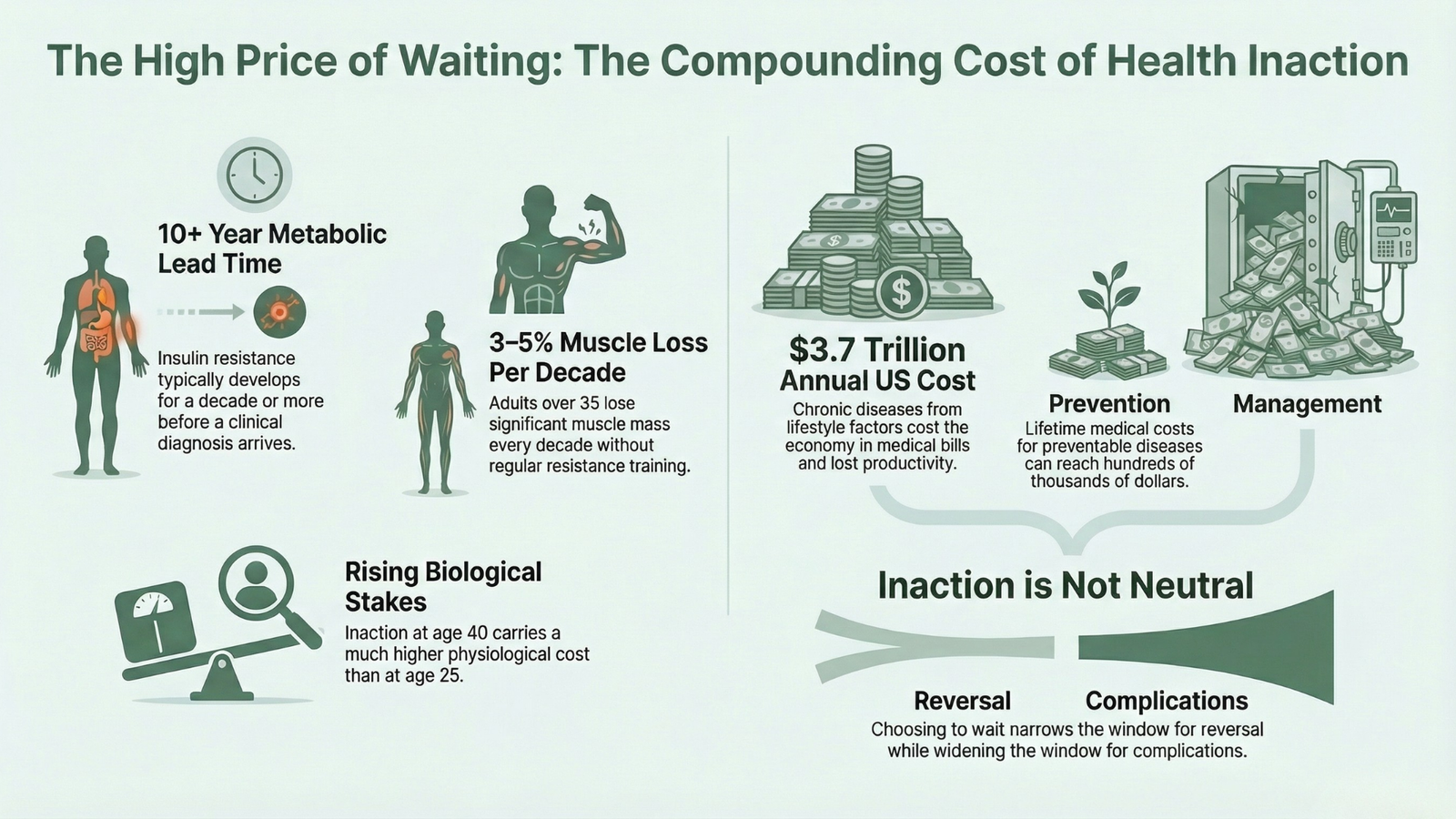
The financial dimension is equally significant and rarely discussed in wellness conversations. A 2023 analysis published by the Milken Institute estimated that chronic diseases driven by preventable lifestyle factors cost the United States economy over $3.7 trillion annually — in direct medical costs and lost economic productivity. At the individual level, the lifetime medical costs associated with obesity, type 2 diabetes, and cardiovascular disease run into hundreds of thousands of dollars for many people. Prevention is not just healthier. It is dramatically less expensive than management.
Then there is the quality-of-life dimension — the one that is hardest to quantify but perhaps most important to sit with.
What does the cost of waiting actually look like in lived experience?
It looks like the 58-year-old who cannot keep up with their grandchildren because their cardiovascular fitness was never maintained. It looks like the 52-year-old who retires from a career they loved because chronic pain — largely preventable through decades of consistent movement — has made the work untenable. It looks like the 65-year-old navigating a type 2 diabetes diagnosis that their physician tells them could have been avoided or significantly delayed with earlier lifestyle intervention.
It also looks like something more subtle and more pervasive: the gradual narrowing of possibility. The trips not taken because energy levels cannot sustain them. The ambitions quietly abandoned because cognitive sharpness has dimmed. The relationships strained because chronic illness and pain create emotional withdrawal and reduced capacity for connection.
The cost of waiting is not paid in a single dramatic moment. It is paid in the slow erosion of the life you intended to live.
The Regret Minimization Framework Applied to Health
Jeff Bezos famously described his decision to leave a lucrative finance career and start Amazon through what he called the Regret Minimization Framework: projecting himself to age 80 and asking which decision — to try or not to try — he would most regret having made.
Apply that framework to your health right now.
Imagine yourself at 80. Not as an abstract exercise, but with specificity. Where are you? Who is with you? What are you capable of doing? What does your daily experience feel like?
Now ask the question honestly: will the version of you at 80 wish you had started taking your health seriously earlier?
The answer, for virtually everyone who has ever faced significant health decline, is an unambiguous yes. And the corollary — which is genuinely good news — is that the version of you at 80 is not yet written. The biological research is explicit on this point: the body responds to investment at any age. The earlier you begin, the greater the compounding benefit. But beginning at 45, 55, or even 65 still produces meaningful, measurable, life-altering improvements in healthspan and quality of life.
The regret runs in only one direction. No one lying in a hospital bed at 72 wishes they had exercised less, slept less, eaten fewer vegetables, or spent less time investing in their relationships. The regret, when it comes, is always for the years when the opportunity existed and the choice was deferred.
You are reading this now. The opportunity exists now.
Stories of People Who Turned It Around
The research on lifestyle intervention is powerful in aggregate. But sometimes the most compelling evidence is human.
Consider the documented cases from Dr. Dean Ornish’s landmark Lifestyle Heart Trial — the first study to demonstrate that comprehensive lifestyle changes could not merely slow but actually reverse coronary artery disease without drugs or surgery. Participants who had been told by cardiologists that their condition was irreversible saw measurable reductions in arterial plaque after one year of intensive lifestyle intervention. Some had their surgical procedures cancelled as unnecessary.
Or consider the growing body of evidence from type 2 diabetes reversal programmes. The DiRECT Trial, published in The Lancet, found that nearly half of participants achieved full remission of type 2 diabetes through dietary intervention alone — without medication. Many had been diabetic for years. The condition that had been framed as chronic and progressive was, for a significant proportion, reversible.
These are not miracle stories. They are the predictable consequences of giving the body what it was designed to receive — and removing what was working against it.
Transformation at any age is biologically real. It is not guaranteed, and it is not always dramatic. But it is available — more available, and more supported by evidence, than the medical culture of chronic disease management has historically communicated.
You are not starting late. You are starting exactly when you needed to — which is now.
A Quick Recap of the 7 Habits for Health for Life
Before the call to action, a brief consolidation — because the goal of this guide was never to overwhelm but to equip.
Here are the 7 science-backed habits that the research identifies as the most powerful levers for building health for life:
- 🏃 Move Your Body Every Single Day — Prioritise daily movement beyond formal exercise. NEAT activity matters enormously. Aim for the WHO-recommended 150 to 300 minutes of moderate activity per week, broken into sustainable daily habits.
- 🥗 Eat for Longevity, Not Just Weight Loss — Shift from caloric thinking to nutrient density and longevity nutrition. Prioritise legumes, leafy greens, olive oil, nuts, whole grains, and fermented foods. Reduce ultra-processed food consumption systematically.
- 😴 Prioritise Sleep — Protect 7 to 9 hours of quality sleep as a non-negotiable biological requirement. Maintain consistent sleep and wake times. Align with your circadian rhythm. Use the 3-2-1 rule to build a protective evening routine.
- 🧘 Manage Stress Proactively — Distinguish between useful acute stress and damaging chronic stress. Build a daily practice from evidence-supported tools: breathwork, mindfulness, nature exposure, and journaling. Invest in vagal tone.
- 🤝 Build and Protect Social Connections — Treat relationship quality as a clinical health variable. Prioritise depth over breadth. Schedule meaningful connection intentionally. Recognise loneliness as a health risk of the same magnitude as smoking.
- 💧 Stay Hydrated and Support Your Body’s Systems — Begin each day with 500ml of water before coffee or food. Reduce alcohol and sugary drinks. Support liver and lymphatic function through dietary and movement choices.
- 🏥 Make Preventive Healthcare Non-Negotiable — Know your biomarkers. Schedule annual wellness checkups. Engage proactively with age-appropriate screenings. Be the most informed advocate for your own long-term health.
The operating principle across all seven: consistency over perfection, systems over willpower, and identity over external motivation. Small, daily, compounding investments — made sustainably over years — produce biological outcomes that no short-term intervention can match.
Frequently Asked Questions: Starting Your Health for Life Journey
The honest answer is that nothing makes this time different unless the approach changes. Most previous attempts at healthy living fail not because of insufficient motivation but because of insufficient design — relying on willpower rather than environmental architecture, attempting too much change too quickly, and lacking a minimum viable routine to sustain momentum through difficult periods. The framework in this guide — specifically the behaviour design principles in Section 4 — addresses the structural reasons habits fail, not just the motivational ones. Start with the minimum viable routine. Build identity before building intensity. Design your environment before testing your willpower.
The research most consistently points to regular physical movement as the keystone habit with the broadest positive cascade across all other health dimensions. It improves sleep, reduces stress, supports better dietary choices, enhances mood and cognitive function, strengthens social motivation, and is associated with the most robust reductions in all-cause mortality of any single lifestyle behaviour. If you start with one habit, start moving — daily, consistently, at whatever intensity your current fitness level supports.
Reframe your relationship with results. The biological changes produced by healthy habits operate on a timeline that is longer than our dopamine-driven reward systems are comfortable with. Two strategies help bridge this gap. First, track leading indicators rather than lagging ones — your daily step count, sleep duration, and habit consistency are within your control today, while weight, biomarker improvements, and disease risk reduction are downstream outcomes that follow. Second, anchor motivation to identity rather than outcomes — “I am someone who prioritises my health” is a motivational statement that remains true regardless of whether the scale moved this week.
For most healthy adults, the habits in this guide are safe to implement independently — and indeed, waiting for perfect professional guidance is often another form of productive-feeling procrastination. That said, preventive healthcare partnerships (as outlined in Habit 7) are a meaningful accelerant. A physician who understands functional and preventive medicine can interpret your biomarkers in the context of your specific risk profile, identify subclinical patterns that general screening misses, and help you prioritise the habits that will produce the greatest benefit given your individual health history. Self-directed implementation and professional partnership are complementary, not alternatives.
This is one of the most underacknowledged barriers in health behaviour change — and it is real. Social contagion research by Nicholas Christakis and James Fowler demonstrates that health behaviours spread through social networks with remarkable power: your likelihood of becoming obese, for example, increases by 57% if a close friend becomes obese, independent of shared environment. The reverse is equally true — positive health behaviours spread through networks in the same way. The practical strategies are: identify even one person in your network who shares your health values and invest in that relationship; be transparent with family about your goals without demanding their participation; and consider that your own visible, consistent health investment frequently becomes the most powerful influence on those around you over time.
Your Next Step
This guide has covered a substantial amount of ground — from the fundamental misunderstanding of what health for life actually means, through the science of longevity and biological aging, across seven evidence-backed habits and into the behavioural architecture of making them last. You now have more than information. You have a framework.
But a framework sitting in your memory — or in a browser tab you intend to return to — does not change your biology. Action does.
So here is the only ask this guide makes of you: choose one habit. Right now. Today.
Not seven. Not three. One.
Which of the seven habits, if implemented consistently over the next 30 days, would produce the most meaningful improvement in your daily experience and long-term health? Where is your weakest link? Where has the gap between what you know you should do and what you are actually doing been widest and longest?
Start there. Not Monday. Not after the holiday. Today — because the version of you at 80 is assembled from the choices made on unremarkable Tuesdays and ordinary Thursday evenings, not from grand declarations of fresh starts.
“The best time to plant a tree was 20 years ago. The second best time is now.”
That proverb was not written about health. But it applies with extraordinary precision.
Health is not a luxury reserved for people with more time, more money, or more discipline than you have. It is the foundational infrastructure through which every other ambition, relationship, creative effort, and lived experience flows. Without it, everything else becomes harder, shorter, and less fully inhabited.
You deserve a long, vital, capable life. The science says it is available to you. The decision is yours to make.
Make it now.
Conclusion: Health for Life — The Complete Picture
Across the five sections of this guide, we have built a comprehensive, evidence-grounded framework for what it actually means to pursue health for life — not as a short-term project or a seasonal resolution, but as a sustained, intelligent, compounding investment in the most important asset you will ever own.
In Section 1, we dismantled the comfortable illusion of being “fine” — the culturally embedded tendency to equate the absence of symptoms with genuine health. We established that health for life is a multidimensional philosophy encompassing physical, mental, emotional, and social wellbeing, and that the gap between feeling okay and thriving long-term is one of the most consequential and underestimated distances in human health.
In Section 2, we went deep into the science — exploring the landmark Blue Zones research that revealed longevity as predominantly lifestyle-driven rather than genetically determined, unpacking the twelve hallmarks of aging and the evidence that they are modifiable through daily choices, and examining the compounding effect of healthy habits over time. The central finding: 75 to 80% of how long and how well you live is within your sphere of influence.
In Section 3, we moved from science to specifics — presenting the 7 science-backed habits with the strongest evidence base for building health for life: daily movement, longevity nutrition, sleep prioritisation, proactive stress management, social connection, consistent hydration, and preventive healthcare. Each habit was grounded in peer-reviewed research and paired with an immediately actionable implementation tip.
In Section 4, we addressed the most common reason health knowledge fails to produce health change — the absence of a sustainable behavioural system. Drawing on the work of James Clear, BJ Fogg, Charles Duhigg, and the neuroscience of habit formation, we built the architecture of a lasting health routine: the minimum viable baseline, identity-based motivation, environment design, progress tracking, and a practical 4-week onboarding plan for introducing the 7 habits gradually and sustainably.
In Section 5, we confronted the real cost of inaction — not to create fear, but to create clarity. We applied the regret minimization framework to health decision-making, examined the documented evidence for lifestyle-driven transformation at any age, and issued the only call to action that ultimately matters: choose one habit, and begin today.
Health for life is not a destination you arrive at. It is a direction you commit to — imperfectly, consistently, with the understanding that every positive choice compounds into a biology that serves you better tomorrow than it did yesterday.
The science is clear. The habits are known. The system is yours to build.
The only variable left is the decision you make right now.



I started writing down one thing at the end of every day — what I actually managed to do. Not a to-do list, not plans. Just one small win. It’s surprising how quickly it shifts your perspective.